
Industrial Facilities
DAIHATSU FACTORY @ SENAWANG
The Daihatsu Factory Workers’ Rest Area, conceived under the “Factory in the Earth” philosophy, is an architectural exploration that integrates heavy industrial functions with a restorative natural environment. The structure is distinguished by an expansive green roof that functions as an extension of the surrounding landscape, providing thermal insulation while creating a continuous walking surface for workers’ recreation and exercise. Beneath this living roof stands a rhythmic array of hexagonal columns with star-shaped capitals, inspired by the adjacent jungle canopy. Beyond their visual presence, these columns incorporate integrated drainage systems that channel rainwater from the roof into underground storage tanks, enabling sustainable reuse for landscape irrigation.
The spatial design emphasizes passive environmental strategies and worker wellbeing through a seamless relationship between indoor and outdoor spaces. Wide, open galleries encourage natural ventilation, with air cooled by adjacent water features before flowing into semi-enclosed resting areas. Daylighting is carefully maximized through high-performance glazing and reflective surfaces that distribute soft natural light deep into the interior, reducing reliance on artificial illumination. By combining exposed concrete and steel with a human-centered philosophy that places comfort and dignity at the core of industrial life, the rest area becomes a calm refuge that counterbalances the intensity of the factory floor.
Client
Daihatsu
Site Area
0.049 Acres
Status
On-Going
RELATED PROJECTS

Cenergy COE @ Sepang
Power Plant @ Paka
Industrial Facilities
POWER PLANT @ PAKA
The Paka Power Plant in Terengganu represents a refined integration of industrial performance and Malaysian cultural identity. Moving away from the typically sterile and purely utilitarian character of energy infrastructure, the design draws from traditional Malay architectural language, particularly the Bumbung Lima and Bumbung Perak roof forms. These tiered, pitched roofs are thoughtfully reinterpreted within a modern structural system, expressed through timber textured finishes and expansive glazing that respond sensitively to the coastal context of Paka. The overall site arrangement adopts a campus like composition, organizing administrative buildings, visitor facilities, and surau around shaded walkways and landscaped open spaces. Deep roof overhangs, controlled daylighting, and passive cooling strategies are employed to address the tropical climate while enhancing spatial comfort.
Beyond its technical function, the redevelopment establishes the power plant as a human centric and environmentally responsive industrial landmark. The master plan introduces generous boulevards, elevated pedestrian connections, and green buffers that reduce the visual and physical impact of heavy infrastructure. Open plan lobbies and naturally ventilated circulation zones promote environmental efficiency while improving the daily experience of users. Through the careful synthesis of local craftsmanship and advanced engineering, the project transcends its role as an energy facility to become a civic symbol. It embodies a strong sense of place that respects Terengganu’s cultural heritage while supporting contemporary energy demands, offering a compelling model for the future of industrial architecture in Malaysia.
Client
Tenaga Nasional Berhad (TNB)
Site Area
2.950 Acre
Status
Tender Stage
RELATED PROJECTS
Daihatsu Factory @ Senawang
Cenergy COE @ Sepang
Industrial Facilities
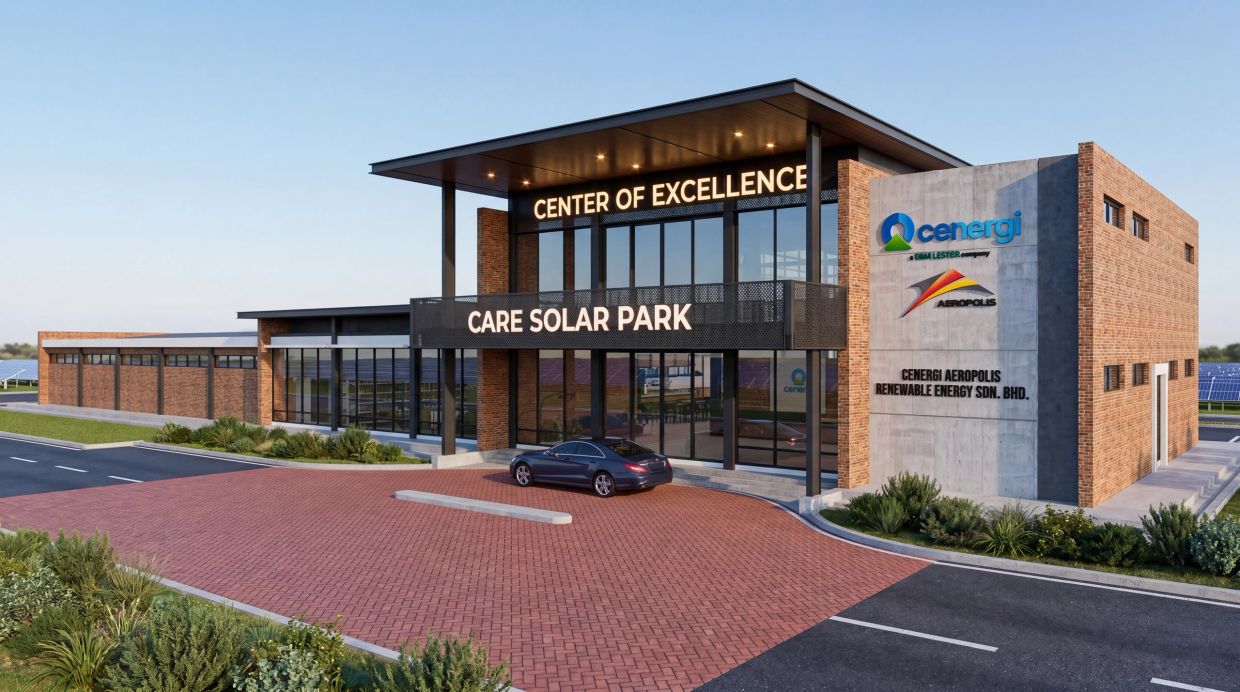
CENERGY COE @ SEPANG
The Centre of Excellence serves as a dedicated exhibition and learning hub that highlights the advancements and applications of solar energy. Designed with contemporary architectural elements, the building provides interactive displays, educational zones, and demonstration areas that engage visitors while promoting awareness of renewable energy solutions and environmental responsibility.
Strategically located in Sepang, the facility integrates exhibition, research, and public engagement functions within a cohesive environment. The design emphasizes sustainability through material selection, natural lighting, and energy-efficient systems, creating a space that not only informs but also reflects the principles of clean energy, innovation, and long-term environmental stewardship.
In addition, the centre functions as a platform for collaboration among industry professionals, researchers, and the community. Flexible spaces accommodate seminars, workshops, and events, fostering knowledge exchange and innovation. The welcoming layout and landscaped surroundings enhance visitor experience, reinforcing the centre’s role as a dynamic destination for learning and inspiration.
Client
PLUS XNERGY
Site Area
0.250 Acre
Status
Schematic Stage
RELATED PROJECTS
Power Plant @ Paka
Daihatsu Factory @ Sepang
