Oversea Endeavour
UNOPS OFFICE & STAFF HOUSING @ PAPUA NEW GUINEA
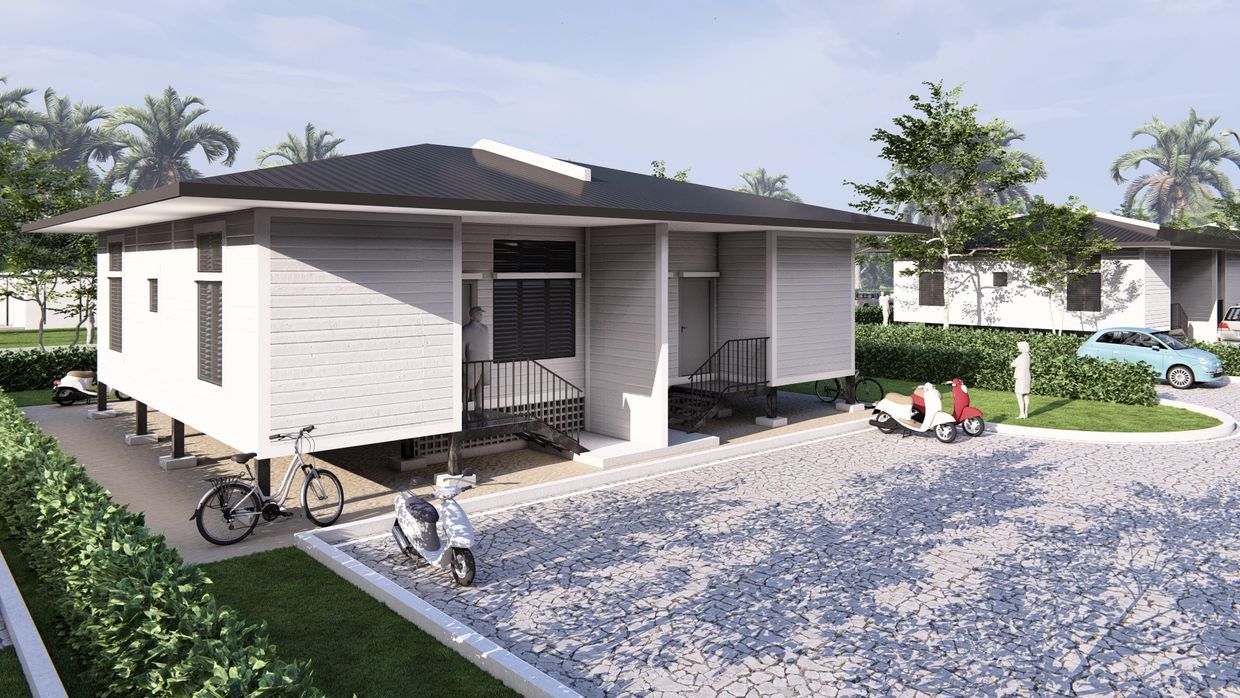
The architectural design for the new UNOPS office and staff housing in Daru, Papua New Guinea adopts a modular and climate responsive approach suited to a remote tropical setting. The development is arranged as a cluster of low rise, single storey pavilions constructed using a lightweight system and slightly elevated above ground level to reduce moisture impact and enhance natural airflow. Each unit is defined by deep roof overhangs and mono pitched or hipped roof forms finished in dark metal sheeting, providing effective shading and protection from intense tropical rainfall. The overall site layout follows a clear, orderly grid, with building orientations optimized for cross ventilation and linked by a network of paved access roads and pedestrian pathways.
Both the housing and office components express a clean, understated architectural language that emphasizes durability, efficiency, and ease of maintenance. The façades employ light coloured, weather resistant cladding combined with generous window openings to create bright, naturally ventilated interiors. Covered verandas and breezeways are integrated into many units, forming transitional outdoor spaces that enhance thermal comfort in the humid climate. Landscaped green buffers and lawn areas between buildings soften the campus character while supporting effective surface drainage. Through the use of standardized construction elements and a site strategy that responds sensitively to local conditions, the project delivers a secure, functional, and comfortable environment for UNOPS personnel.
Client
UNOPS
Site Area
7.630 acre
Status
Completed
RELATED PROJECTS

UNOPS Lab & Medical Incinerator @ Samoa

Oversea Endeavour
UNOPS LAB & MEDICAL INCINERATOR @ SAMOA
The proposed facility features a modern, rectilinear two-story design that emphasizes functional efficiency and climate-appropriate aesthetics. Its exterior is defined by a clean, white-toned palette and a rhythmic arrangement of vertical shading fins along the second floor, reducing solar heat gain while allowing generous natural light into the laboratory spaces. A prominent glass-fronted entrance, sheltered by a sleek flat-roofed portico, establishes a clear and welcoming point of access for staff and visitors. Sustainability is integral to the design, highlighted by a roof-mounted solar array positioned to capture Samoa’s strong solar exposure and significantly reduce the facility’s carbon footprint.
The site plan is carefully organized to support high-traffic medical operations, including a dedicated accessible parking zone and specialized bays for service vehicles. The facility layout intentionally separates public areas from critical technical zones, such as the laboratory wings and medical incinerator, ensuring both biosafety and operational privacy. Modern landscaping and perimeter security features help the complex integrate with its surroundings while maintaining safety. The use of durable, low-maintenance materials ensures long-term resilience in Samoa’s humid tropical maritime climate.
Client
UNOPS
Site Area
5.045 acre
Status
Completed
RELATED PROJECTS
UNOPS Office & Housing @ Papua New Guinea
